
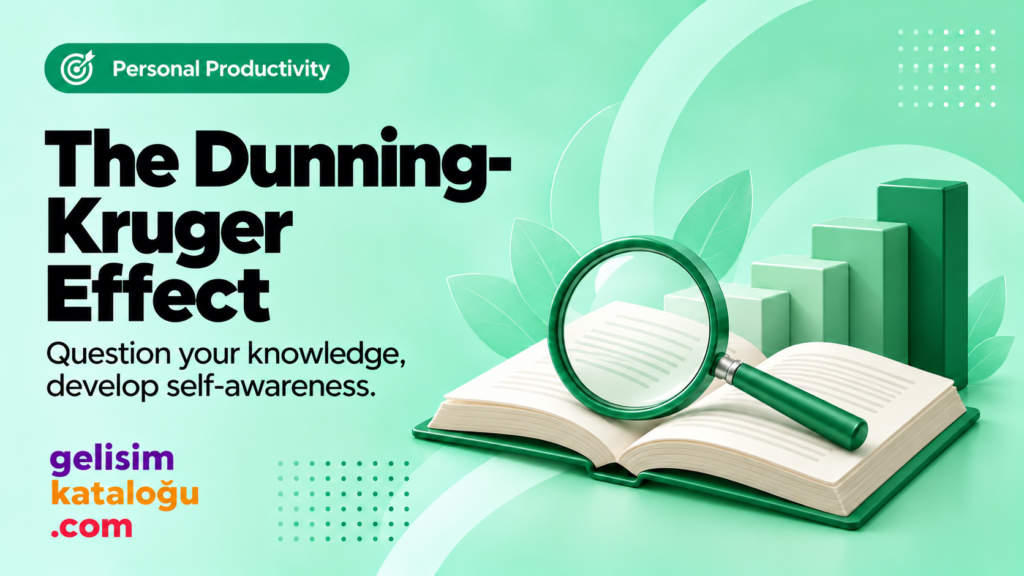
The Dunning-Kruger Effect

This interactive course examines what research really says about the Dunning-Kruger effect and builds practical calibration habits to spot blind spots at work.
Duration
30 minutes
Format
Interactive
Format
SCORM-AICC-Video
Language
English
Updated
2026
Content Partner
Digitallica
The Dunning-Kruger Effect

About the course

The Dunning-Kruger effect is one of the most frequently quoted yet most misunderstood psychology concepts in business. Going beyond popular slogans, this course presents the findings of the 1999 study and subsequent research in plain language, then brings the topic into everyday work decisions, time estimates and meetings. It addresses not only overconfidence but also the “curse of knowledge,” which leads experts to underestimate themselves.

Course objective: Help participants assess their own knowledge and skills more accurately, align their confidence with their accuracy and develop habits that shrink their blind spots.

By the end of this course, you will be able to:
– Distinguish research findings on the Dunning-Kruger effect from common myths,
– Recognize states of being overconfident, overly hesitant and well calibrated,
– Notice how the curse of knowledge affects knowledge sharing within a team,
– Use calibration tools such as asking for specific feedback, expressing confidence as a percentage, estimating first and comparing afterward and asking “What don’t I know?”,
– Prepare a personal blind spot plan with examples from your own work.

The course progresses through a myth-or-fact sorting activity, a calibration test in which you measure your own confidence level, workplace scenarios, behavior classification and choose-the-right-statement exercises. It continues with a personal blind spot plan and concludes with knowledge check questions.
The course is delivered in English.

Who this course is for

All employees who want to assess themselves more accurately; managers and team leaders who estimate timelines, make decisions and give feedback; and experts moving into a new field or role.

Why it matters

Seeing ourselves as better or worse than we are translates at work into optimistic deadlines, overlooked risks and valuable information that never gets shared. Employees who align their confidence with accuracy make more realistic plans, ask for help at the right time and help the team make sounder decisions.

Format and delivery

  • SCORM-AICC-Video delivery, ready to upload to any learning management system that supports these standards
  • Runs in your existing LMS — no need to switch platforms
  • Desktop, tablet and mobile — fully responsive
  • Pick up where you left off with completion tracking
  • No LMS of your own? Publish via Oriento instead

Frequently asked questions

Can we publish this course on our own system?

Yes. The course is delivered as SCORM-AICC-Video and uploads to any learning management system that supports these standards. There’s no need to change your existing infrastructure.

Can you adapt the content to our organization?

Catalog courses are off-the-shelf content. If you need a program built around your own scenarios, brand and processes, our Custom Content Design service has you covered.

How often is the course updated?

This course was last updated in 2026. Catalog content is reviewed regularly to reflect changes in regulations and practice.

How many users can it be licensed for?

Licensing depends on the number of users and the term. Tell us what you need and we’ll put together the right package.

Is this course about people who know little thinking they are experts?

No. The course shows that this popular slogan is narrower and more contested than the research suggests. It addresses both overconfidence and experts’ tendency to underestimate themselves, and focuses on practical calibration tools that anyone can use.

Try this course with your team

We’ll open demo access so you can review the content with your own team, then discuss licensing for the full catalog or the titles you choose.

Request a Demo